The short answer
Thun Castle, on its hill above the old town, is the castle to see if you only have time for one. Along the lake, Oberhofen and Spiez are the castle stops most people make, and both are reached by lake boat. The simplest day is a boat from Interlaken West with one or two stops, then the fast train back, or the same route in reverse.
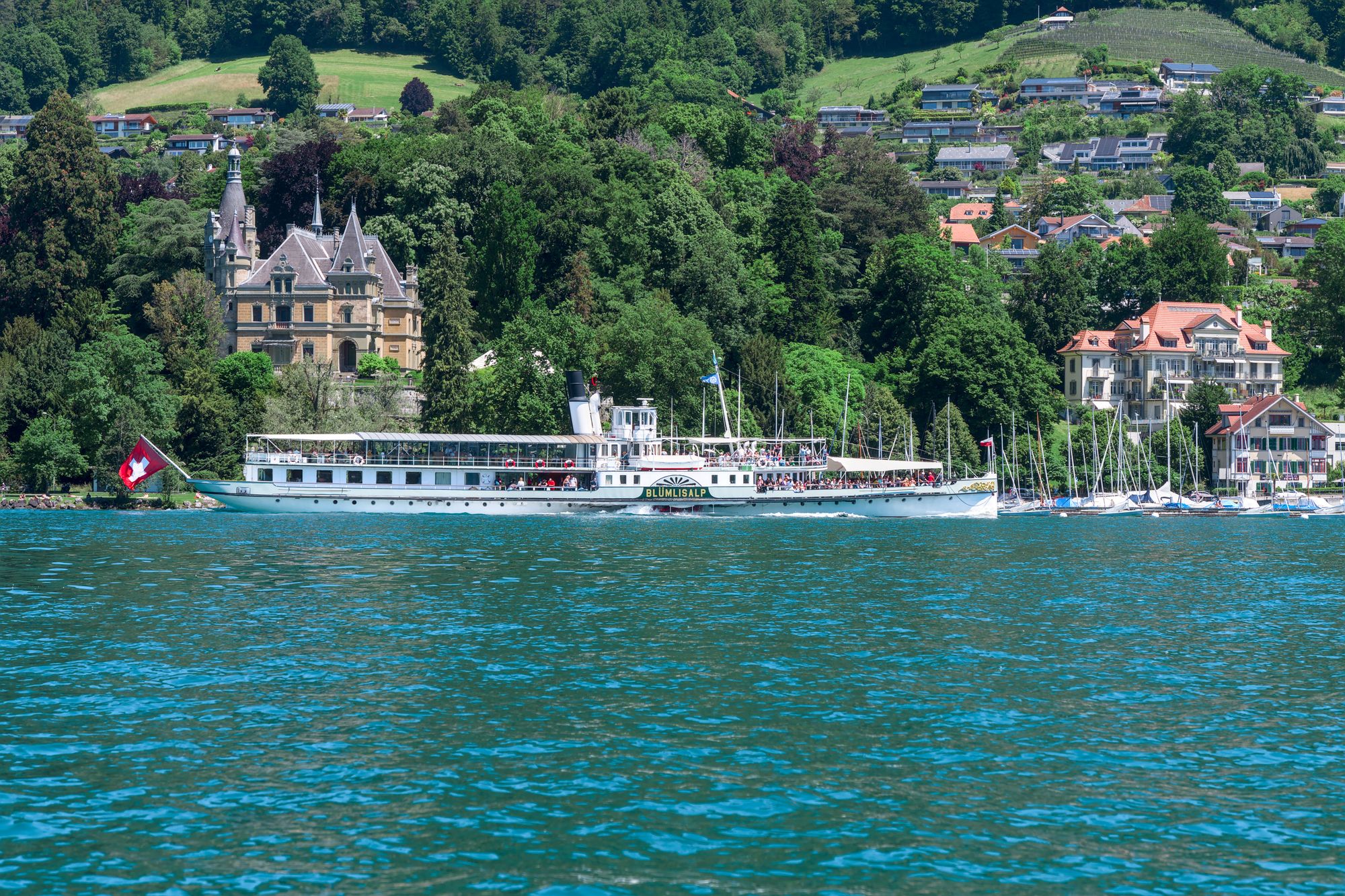
Lake Thun has a string of castles and nineteenth-century villas along its northern bank, with vineyards above Spiez and the Eiger, Mönch and Jungfrau in view across the water. Anyone searching for Thun Castle usually wants to know whether it is worth the detour and how it fits with the lake. It is, and it works best as the finish to a day on the water.
This guide covers the castles and nearby sights in our notes, what each one is like, and how to link them by boat and train in a single day. Where a detail such as an opening month or a ticket rule is not settled, check the current timetable or the attraction's own website before you travel.
Compare
Your options at a glance
| Option | How it works | Time | Best for |
|---|---|---|---|
| Boat from Interlaken West to Thun | Leaves from the pier near Interlaken West and calls at lakeside villages on the way. Some sailings are by historic paddle steamer in summer. | Around two hours, a little over with stops. | Travelers who want the scenic route and plan to stop at Oberhofen or Spiez. |
| Fast train from Interlaken West to Thun | Runs via Spiez and covers the same distance as the boat. | Under 30 minutes. | The return leg after a morning on the water, or a quick transfer with no stops. |
| Train from Bern to Thun, then boat | Frequent trains run to Thun, and the boat landing is a short walk from the station. | About 20 minutes by train from Bern. | Travelers who want to add a morning in Bern before sailing on towards Interlaken. |
| Guided cruise and city tour | A seven-hour guided trip combines the Beatus Caves, a Lake Thun cruise and a Thun city tour. Other guided options are listed on this page. | Seven hours in total. | Those who would rather not plan the boat and train connections themselves. |
Thun Castle: the one to climb
Thun Castle sits on a hill above the old town, and its massive keep is the heart of the site. The keep dates back to the late twelfth century and has four corner turrets. Inside is a history museum, with a large knights' hall under the roof.
The usual approach is by covered wooden stairs from the main street. Climb to the turrets for views over the old town, the lake and the high Alps. Allow time for the museum and the turrets, then walk back down through the town.
- Keep from the late twelfth century, with four corner turrets
- History museum and a knights' hall under the roof
- Views from the turrets across the lake to the high Alps
- The museum charges its own admission
Oberhofen Castle: the tower in the water
Oberhofen is the castle many people picture when they think of Lake Thun. Its slender tower stands in the water, and the castle has a museum of period rooms and a lakeside park. The boat landing is a short walk from the castle.
Check the museum's opening season before you go. Our notes give roughly May to October, which lines up with the main summer timetable, but confirm it on the day you plan to visit.
- Slender tower standing in the water
- Museum of period rooms
- Lakeside park and gardens
- Short walk from the boat landing
Spiez Castle and the bay
Spiez is a small town on a sheltered bay. The castle and the church stand together on a promontory, with vineyards climbing behind them. The castle can be visited in summer, so plan this stop for those months.
Spiez also makes a good break between boats. The bay is a pleasant place for a coffee, and the view back across the water is one of the calmer ones on the lake.
- Castle and church on a promontory above the bay
- Vineyards climbing behind the town
- Castle visits are a summer option
- Good for a coffee between boats
Beyond the castles: the caves and the Niesen
The St. Beatus Caves lie above the north shore. Lit paths run well into the mountain, past underground streams and waterfalls, and they are linked with the legend of an early hermit. A path climbs from the Beatenbucht boat landing, or you can take the bus from Interlaken. The caves are usually open in spring and autumn as well as summer, but check the current season before you go.
The Niesen is reached by a funicular from Mülenen, inland from Spiez. The summit gives views over both lakes and across the Bernese Alps. Pass holders may get a discount on the caves and the funicular, or may pay separately, so check when you buy.
- Caves reached by a climb from the boat landing or by bus from Interlaken
- Underground streams and waterfalls on the lit paths
- Niesen funicular from Mülenen, inland from Spiez
- Views from the summit over both lakes
Planning one day on the lake
The most common plan is to sail one way and return by train. Start at Interlaken West, sail towards Thun with a stop at Oberhofen or Spiez, then take the train back. The full boat run is around two hours, while the train covers the same distance in under 30 minutes via Spiez.
To make it a whole day, add the caves or a longer stop at one village. From Bern, take the train to Thun in about 20 minutes, see the castle and the old town, then continue by boat to Interlaken.
- Start at Interlaken West and sail towards Thun
- Stop at Oberhofen or Spiez for the castle and lunch
- Finish with Thun Castle and the old town, then return by train
- From Bern, reverse the order and sail on to Interlaken
When to go
May through September is the best period. The complete boat timetable runs, the castles and the Niesen are open, and the lakeside gardens are in bloom. Spring and autumn bring fewer people and clearer air.
In winter, boat services are much reduced and many attractions close, so the castle-and-boat day is not a practical plan in those months.
- May to September: full boat timetable and open attractions
- Spring and autumn: fewer people and clearer air
- Winter: reduced boats and many closures
Tips from our specialists
- 1Scheduled lake boats are covered by the Swiss Travel Pass. If you want the historic experience, ask at the pier which sailings are by paddle steamer.
- 2Allow about ten minutes to walk from Interlaken West station to the pier, which sits at the end of a short canal.
- 3Thun works well as a stop on arrival day. Store your luggage in a station locker, spend a few hours in town, then take the boat onward.
- 4Do not swim in the Aare unless you know where to get out. The current is strong, and locals use specific exit points.
- 5On a Saturday, the market around Rathausplatz is a good place to buy local cheese and bread.
Book it
Tours and tickets
Run by local operators, with prices and reviews from our booking partner Viator.

Beatus Caves, Lake Thun Cruise and Thun City Tour from Interlaken
from CHF 252

Tandem Paragliding over Lake Thun from Interlaken
from CHF 190

Private Bernese Alps Tour from Lucerne: Interlaken, Grindelwald and Lauterbrunnen
from CHF 280

Interlaken E-Bike Day Ride: Castles, Rivers and Two Lakes
from CHF 159

Private Day Tour to Interlaken, Lauterbrunnen and the Aare Gorge
from CHF 240
Questions
Frequently asked
Is a Lake Thun cruise worth it if I have already seen Lake Brienz?
Yes. Thun is about castles, villas and wide views of the skyline, while Brienz is more about cliffs, color and waterfalls. On a short stay, pick one. With four nights or more, you can do both.
Do I need a separate ticket for the castles?
Lake boats on regular services are covered by the Swiss Travel Pass, but the castle museums charge their own admission. Check each site before you go, as rules can differ between attractions.
Do boats run in winter?
Only a small number of sailings run on some days. The full service runs from spring to autumn, and the main season is May to September.
Should I stay in Thun or Interlaken?
Interlaken is closer to the Jungfrau trains. Thun suits travelers who want a town with everyday life and evenings, and who do not mind a train ride of around thirty minutes to the mountain lines.